Why Rowlett's Clay Soil Causes Slab Leaks
If you own a home in Rowlett long enough, there is a good chance you will hear the phrase 'slab leak' from a neighbor before you ever need it yourself. The reason it comes up so often here specifically, rather than being generic plumbing bad luck, traces back to the soil this whole area is built on.
The Soil, Not Just The Pipe
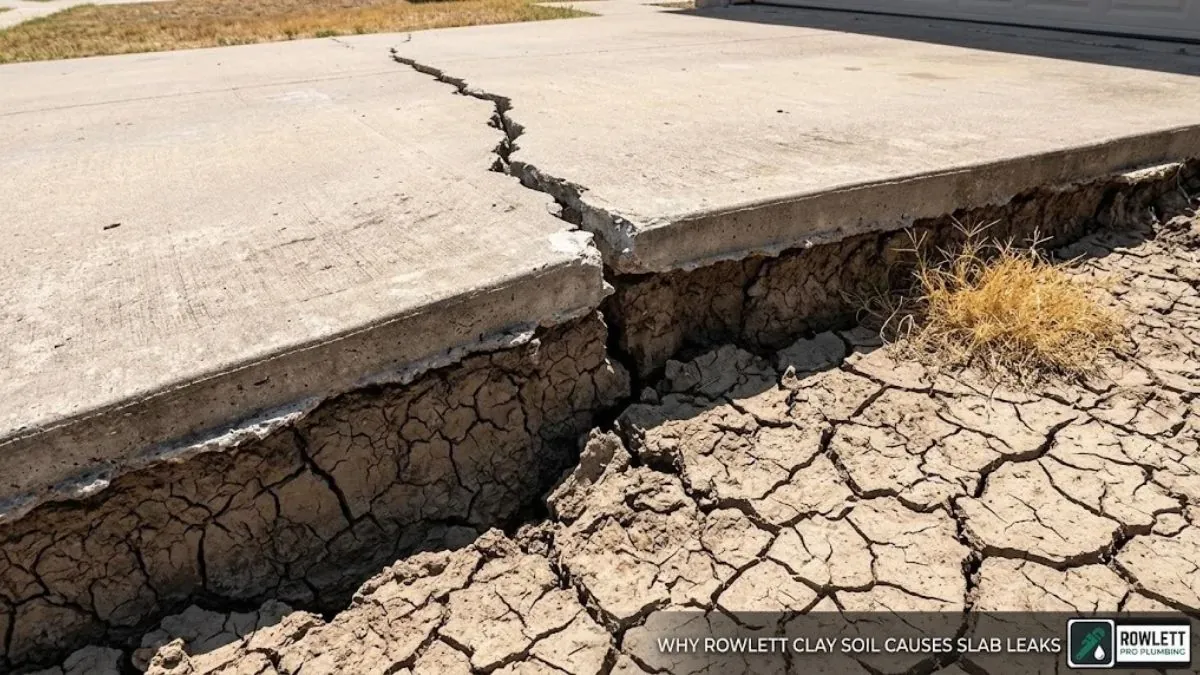
Rowlett and the land around Lake Ray Hubbard sit on expansive clay soil, the same black-gumbo clay common across much of North Texas. That soil absorbs water and swells during wet stretches, then shrinks and cracks during dry spells, and it repeats that cycle every year. A concrete slab foundation does not move much on its own, but the ground underneath it does, and the copper supply lines running through that slab get squeezed and shifted every time the soil moves.
That is the practical difference between a slab leak here and a random pipe failure elsewhere: it is less about pipe age alone and more about how many wet-dry cycles a given line has been through. A 15-year-old copper line under a slab in a stable, sandy-soil market might never leak. The same line under a Rowlett slab, cycling through Texas summers and occasional wet winters for 15 years, has been mechanically stressed the entire time.
What This Means If You Own An Older Rowlett Home
- ✓Homes built before the mid-1990s are more likely to still have original copper under the slab.
- ✓A slightly warm patch of flooring, especially over a slab-on-grade section, is worth checking.
- ✓A water bill that climbs with no new usage to explain it is a real signal, not a fluke.
- ✓Electronic leak detection finds the exact spot before anyone opens the floor.
How This Compares To Other DFW Suburbs
Not every North Texas suburb sees the same rate of slab leak calls. Cities built on sandier or more stable soil, or with a higher share of newer PEX plumbing, tend to report fewer of these calls per capita than a lake-adjacent, clay-soil market with an older housing stock. Rowlett checks both of those boxes: real clay soil movement tied to the lake's water table, and a meaningful share of homes built in the decades before PEX piping became the standard choice for new construction.
That does not mean every Rowlett home is at equal risk. A house built in the last 10 to 15 years, especially anything plumbed in PEX rather than copper, is far less exposed to this specific failure mode than an original-plumbing home from the 1970s or 1980s near the lakeshore.
A Simple Test Any Homeowner Can Run
Shut Everything Off
Turn off every faucet, appliance, and irrigation zone in the house.
Check The Meter
Find the small leak-indicator dial on your water meter, usually a red or black triangle.
Watch For Ten Minutes
If that dial is still turning with everything off, water is moving somewhere it should not be.
Call For Diagnosis
A moving dial does not confirm a slab leak specifically, but it confirms a real leak worth tracing.
Meter still moving with everything off? That is worth a call today.
☎ Call (972) 903-8224What Actually Helps
Watching the water meter with everything in the house shut off is the single easiest early check a homeowner can do. If the small leak-indicator dial on the meter is still spinning, water is moving somewhere it should not be, and a slab leak is one of the likely places to check next, especially in a home with the housing-age and location profile described above.
What A Technician Actually Checks
Listen
Acoustic equipment picks up the sound of pressurized water escaping under the slab.
Narrow It Down
Correlator equipment cross-references two listening points to pinpoint the leak's location within a small radius.
Confirm Line
Hot and cold lines are isolated separately to confirm exactly which one is leaking.
Mark And Plan
The leak location is marked on the floor and the repair path (spot repair, reroute, or repipe) is explained before any concrete is opened.
A Note On Foundation Repair Companies
Foundation repair companies serving the Rowlett area, including national chains with a local presence, correctly point out that clay soil movement is what stresses a Rowlett-area foundation in the first place. That is true, and it is also a separate problem from a slab leak itself: a plumber fixes or reroutes the leaking pipe, while a foundation company addresses soil-related settling or cracking in the concrete itself. A home can need one, the other, or occasionally both, and it is worth getting each diagnosed by the right specialist rather than assuming one fix covers both problems.
Common Questions
It depends on the policy, but many Texas homeowner policies cover the cost of accessing and repairing the leak itself, sometimes including a set dollar amount toward locating it, while excluding gradual damage or the foundation repair that may follow. Read your policy's water-damage section closely, and keep documentation of the leak's cause for any claim.
No. A pinhole leak under a slab only gets worse over time as water pressure keeps working at the same weak point in the pipe. Waiting rarely saves money, since a small leak left alone for months can lead to flooring damage, mold, or a larger repair than an early spot fix would have needed.
Want a straight answer on your own house? Call and describe what you are seeing.
☎ Call (972) 903-8224Related Reading
If a warm spot or a climbing water bill sounds familiar, our slab leak detection and repair page covers how the diagnosis and repair process actually works. Our water heater repair page covers the other most common cause of an unexplained puddle near the garage.